USBL Acoustic Positioning
USBL is a system that uses acoustic sound waves to determine position underwater. A USBL set up consists ofthe USBL head unit containing an acoustic transceiver and a hydrophone array, and a transponder containing a transceiver. The USBL head unit can use range and approach angles to calculate the position of the transponder.
USBL stands for Ultra-short Baseline. It is an old, loosely defined phrase referring to an acoustic positioning system with multiple hydrophones in a single unit.
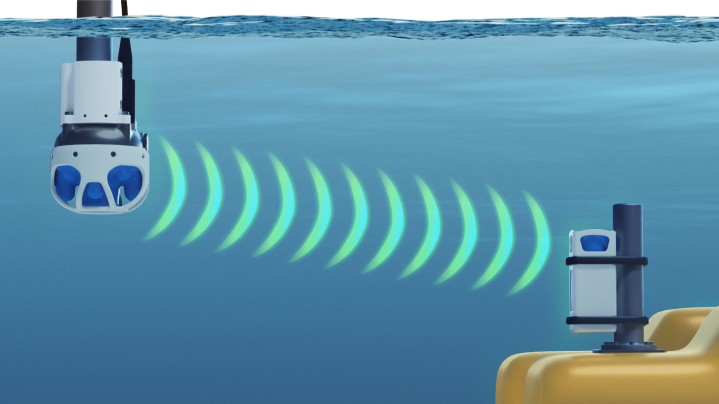
Typical USBL positioning set up
A typical USBL set up will have a USBL transceiver mounted on a pole attached to the side of a ship and another USBL transceiver mounted on a vehicle underwater, as shown above. The USBL system mounted on the pole is known as the surface unit and the USBL system underwater is known as the subsea unit.
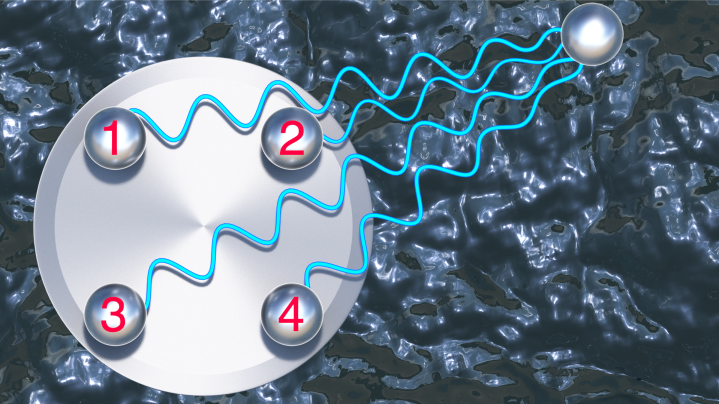
USBL hydrophones receiving acoustic sound waves
The way a USBL system works is that the USBL head unit, Subsonus will first transmit an acoustic sound wave signal. That acoustic signal travels through the water at the speed of sound and arrives at the transponder, Subsonus Tag, a short time later. The transponder receives the acoustic signal and replies with its own signal. The USBL head unit receives the response on each of its hydrophones, which are separated by a known distance. By comparing the acoustic signals' time of arrival at each of the hydrophones, it is possible to determine the direction the signal has come from. By comparing the time at which the signal was transmitted with the time at which the signal was received, the amount of time the signal was travelling through the water can be determined. This travel time can be used to calculate the distance (range) between the USBL head and the transponder by using the speed of sound through water. With both distance and bearing, the relative position of the transmitter can be determined.